
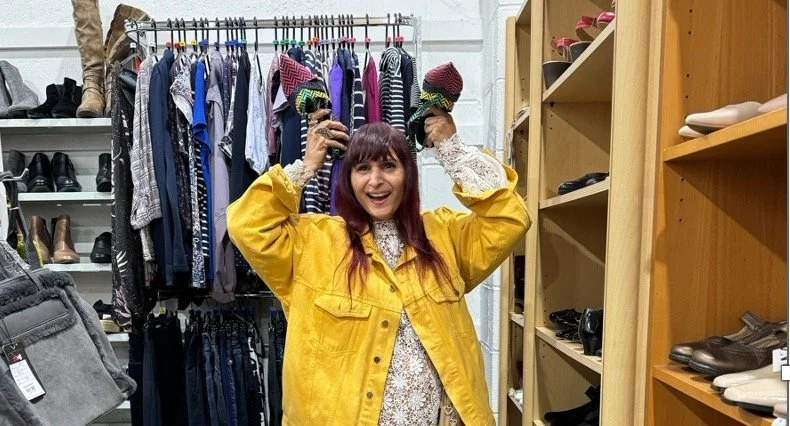
About half my wardrobe is secondhand. So is around 80% of my home, from the tables to the teacups. Even my dog, Sophie Bear, was rehomed.
My first vintage shop was Milton's Shoes in the Exchange District in Winnipeg. I was about 14, and I'd heard about it from a friend's older sister. The best part was upstairs: a warehouse of vintage clothes still with their original price tags and labels. Suits, coats, dresses, hats, gloves. The owner knew every single piece of stock down to the smallest detail.
I bought a pair of bright pink pedal pushers and a white frilled blouse, and he recommended striped pointy plimsolls to go with them. I wore that outfit for years. I still wonder where those clothes ended up.
Secondhand finds its way onto my jobs too. I was once styling a band for a music video. They wanted a 70s feel, but I was told they didn't wear vintage or secondhand. I bought everything on the brief, and I also brought a few secondhand key pieces. I hung it all on the rails and let them choose. They picked the secondhand pieces, because they felt more authentic. When I told them, they thought it was cool.
Why shop secondhand?
You find pieces that aren't in the shops anymore: vintage, designer, one of a kind. It costs far less than buying new. And when you buy from a charity shop, the money goes to help someone else.
Here's how I shop it.
1. Know what you're looking for
Walking into a secondhand shop without a plan can be overwhelming. Before you go, look at your wardrobe and list the gaps. Do you have a pair of trousers you love but no top to wear with them? Do you need a belt? Set a budget too. It's very easy to get carried away when everything is so affordable.
2. Stay open, and shop out of season
Have a plan, but leave room for the unexpected. Some of the best pieces are the ones you didn't know you were looking for. I love shopping out of season: I once found a great leopard print coat for £5 in July.
3. Go early, and go back
Shops are quieter and better stocked in the morning. New stock goes out as it comes in, so a shop you visit at ten might have a whole new rail by the time you walk past again on the way home. Where there's one charity shop there are usually several, so plan a route. And look for the markdown rail, often at the back.
4. Learn to spot quality
Natural fabrics like cotton, wool and silk last longer and age better. Check the stitching and seams: even, sturdy stitching means a well-made piece. Get to know labels. And be realistic about condition. A missing button is an easy fix; a stain or a big tear might not be.
5. Try it on, and bring a tape measure
Sizes vary hugely between brands and decades. You might be a 12 in a trapeze dress and a 14 in a bodycon one. Wear something easy to take on and off. In the fitting room, use the chair: sit down and check the waist and thighs, then walk and bend. And carry a tape measure. If you're not sure about a size, measure the garment and save yourself the try-on.
If something is almost perfect, alter it. I'm short, so I'm always having trousers hemmed. It still costs less than buying new, and the right fit makes an outfit look expensive.
6. Look in the corners
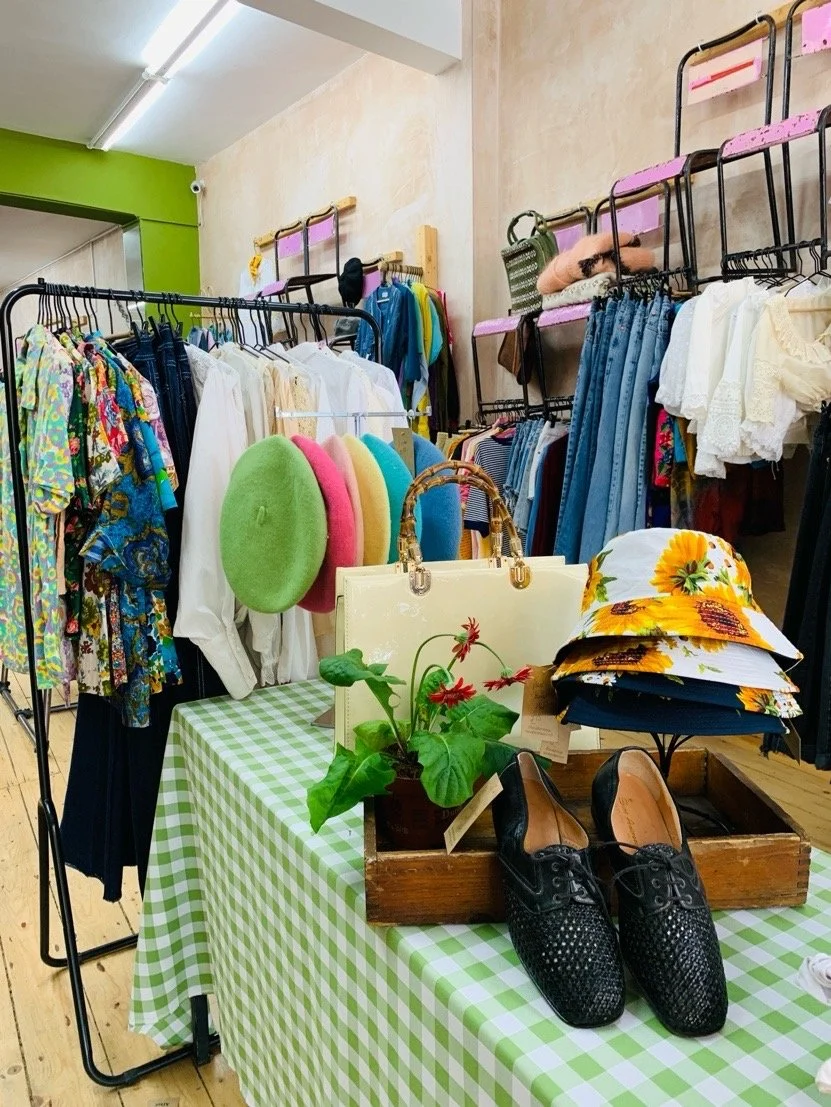
Accessories hide on high shelves and in baskets in the corner. Look for jewellery with secure clasps (many charity shops get new stock from high street brands, sometimes with the tags still on). Check bags inside as well as out, and make sure the zip works. A belt with a great buckle is worth having, because you can always replace the belt.

7. Get to know the people
Talk to the volunteers, staff or owner. Ask about their favourite piece in the shop, or whether they've seen anything you'd love. That's how you hear about the hidden gems.
Secondhand Christmas gifts
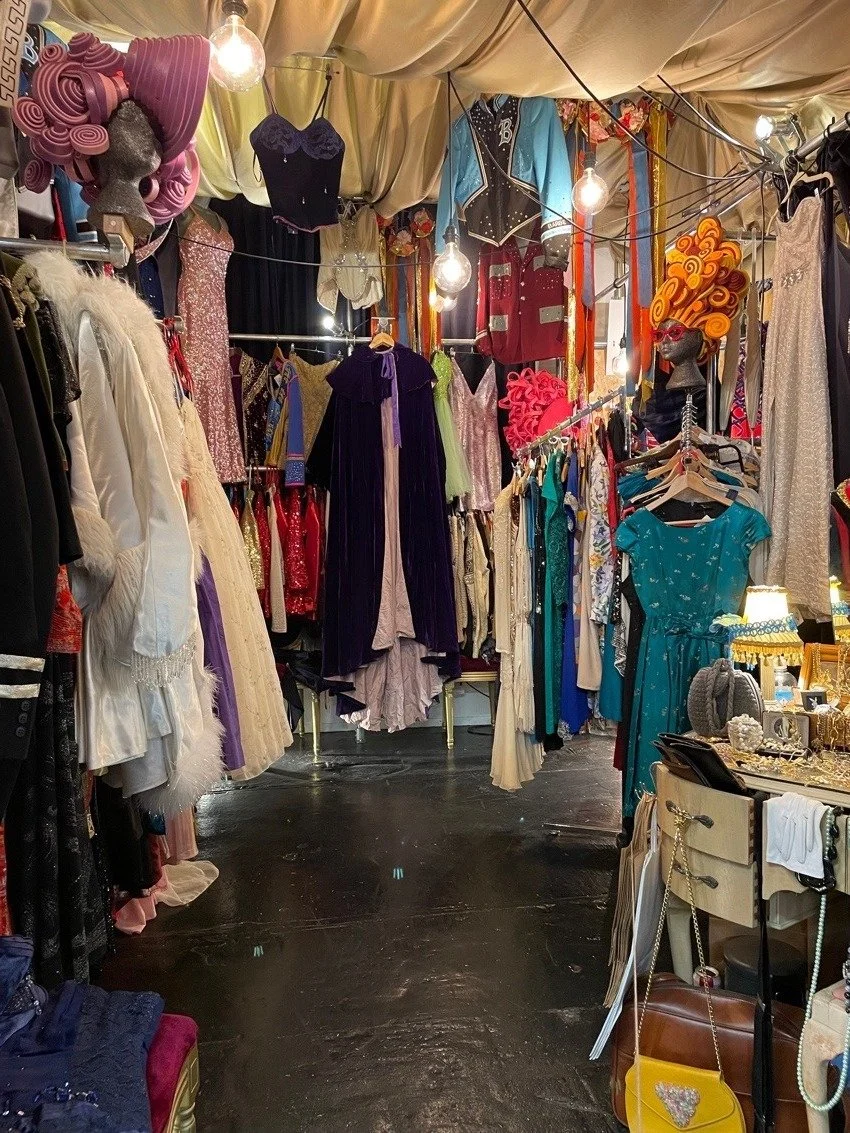
Charity shops are one of my favourite places for Christmas presents. There are always beautiful scarves, and I'll often wrap a gift in a scarf instead of paper. Look for jewellery that's still new with its tags, a vintage bag, or something for the home: a vase, a lamp, a framed picture. I have a whole wall of framed pictures at home, all found in charity shops. Books make a lovely present too.
A gift with a story behind it means more. And every time you buy something from a charity shop, you're helping someone else too.
Secondhand shopping is a marathon, not a sprint. Enjoy the hunt.
If you'd like help building a wardrobe that feels like you, secondhand or new, email me at rebekah@fashion-stylist.net.