
some mornings begin in a tizzy - dressing through grief emotion and change
Some mornings begin in a tizzy.
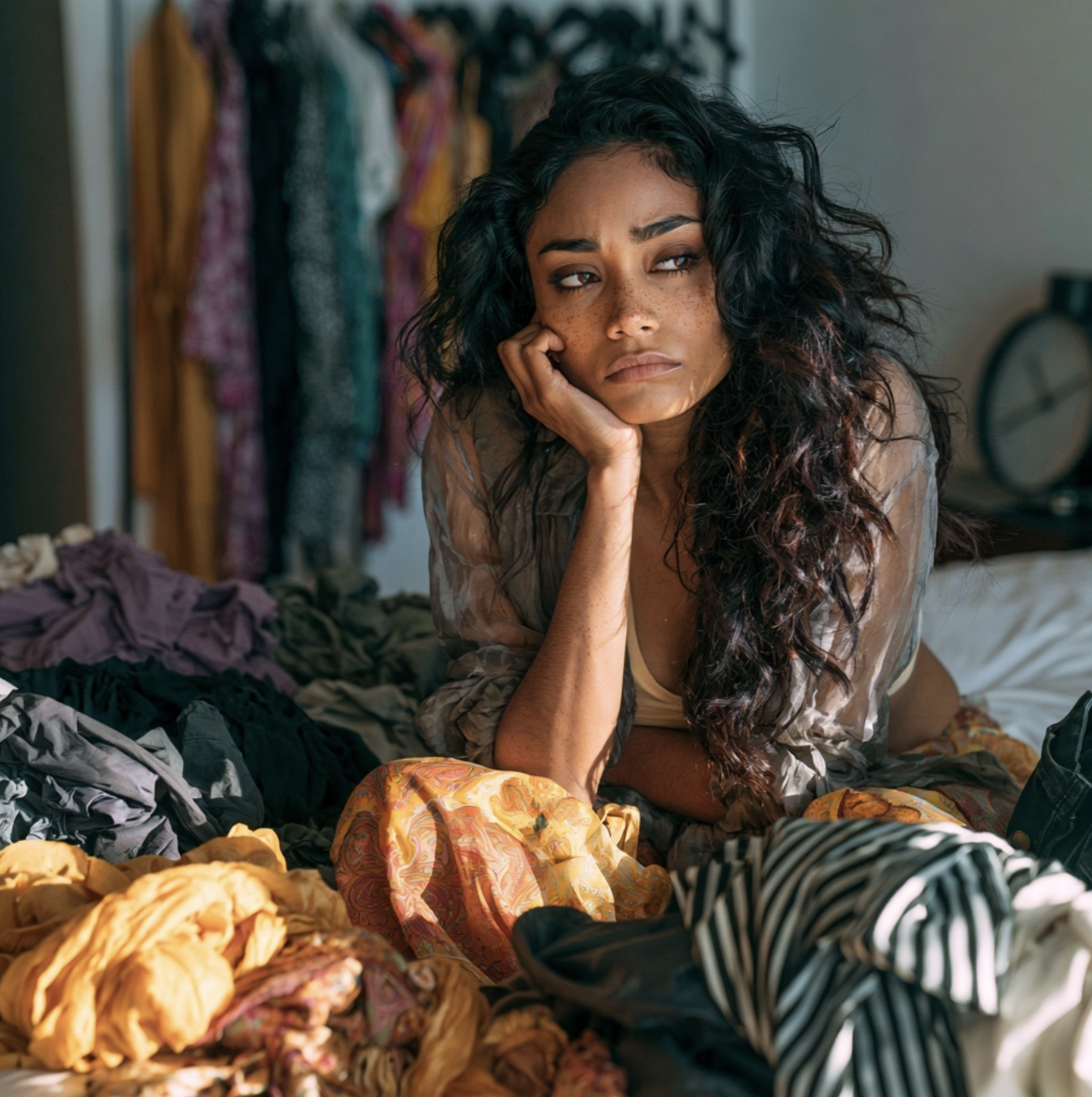
Sometimes I wake up feeling tired, unsettled or emotionally out of step with myself. You too? Perhaps you haven’t slept properly. Or you are dehydrated, worried about something or simply not feeling overly happy with your life in that moment. Before the day has even begun, your thoughts are moving faster than you are. Then you have to get dressed…If I’ve slept badly it has the potential it run my whole day. A difficult night doesn’t always stay in the night. It can follow us into the next day, affecting our mood, concentration, confidence and how emotionally resilient we feel. As sleep scientist Professor Matthew Walker explains, “Sleep is the single most effective thing we can do to reset our brain and body health each day.” On those mornings, we often choose clothes that reinforce exactly how we already feel. We reach for something shapeless because we want to disappear. We dress entirely in dark colours because the day feels heavy. We wear the oldest, easiest thing we can find because we don’t have the energy to think about ourselves.
There is nothing wrong with wanting comfort, and there are days when getting dressed at all is an achievement. But sometimes we aren’t dressing to comfort ourselves. We are dressing to confirm how badly we feel. We look in the mirror and see the exhaustion, sadness or chaos we were already carrying. The clothes become another layer of evidence that we are not ourselves, that life is not going well or that we need to hide from the world. The feeling creates the outfit, and then the outfit reinforces the feeling.
When my husband died, I didn’t really know who I was anymore. For years, I woke up in a tizzy almost every morning. Grief wasn’t one clear emotion that appeared and then passed. It changed my sense of identity and altered the shape of my days. The life I knew had changed, and so had I, but I couldn’t yet see who I was becoming. When you lose someone so central to your life, even the most ordinary decisions can feel difficult. What to eat. Where to go. How to begin the morning. What to wear. These questions appear small from the outside, but when your identity has been disrupted, they can feel enormous.
My clothes were still there, but I didn’t always recognise the woman who had worn them. Some pieces belonged to a life that no longer existed. Others carried memories that could be comforting one day and unbearable the next. Getting dressed was no longer simply about creating an outfit. It was about trying to locate myself.
Dr Brené Brown writes about the emotional armour we use to protect ourselves when we feel afraid or vulnerable. As she puts it, “It’s not fear that gets in the way of daring leadership; it’s armor.”
Although she is writing about leadership, the idea reaches far beyond our professional lives. We all develop ways of protecting ourselves when life feels uncertain. A big oversized jacket can make us feel protected and capable. I have a favourite denim jacket that I often wear for this reason. A familiar jumper can create a sense of safety. Dark glasses, a large coat or a particular silhouette can give us distance from the outside world. Sometimes we genuinely need that protection.
Armour is not always bad. There are moments when it helps us step outside, face other people and move through a difficult day. The question is whether our clothes are supporting us or trapping us inside the feeling we are trying to escape. Are we choosing black because it makes us feel strong, elegant and clear—or because we want to disappear? Are we wearing something oversized because it gives us comfort—or because we cannot bear to be seen? Are we reaching for the same tired clothes because they soothe us—or because we have stopped believing we deserve anything better?
The garment itself is not the answer. The feeling behind the choice is what matters. When we are struggling, we often imagine that change needs to be dramatic. We think we must wake up transformed, create an entirely new wardrobe or suddenly become a brighter, more confident version of ourselves. But most meaningful change doesn’t happen that way. It happens slowly, through very small decisions. Perhaps you don’t need to change the whole outfit. Perhaps you start with one piece.
It might be a shirt in a colour that brings some warmth back into your face. It might be the jacket that always helps you feel more composed. It could be a soft scarf, a beautiful pair of earrings or a favourite dress that removes the pressure of putting several pieces together. You are not pretending that everything is fine. You are simply giving yourself something supportive to wear while it isn’t. That distinction matters. Dressing to feel better is not about denying grief, sadness, anxiety or exhaustion. Clothes cannot repair a loss or solve everything that is wrong in our lives. But they can change the way we hold ourselves for the next hour. They can offer a little comfort, structure, energy or connection when those things feel difficult to find.
When I woke up in a tizzy, I didn’t need to become a completely different person by the time I left the house. I just needed to find one small point of connection with myself. Sometimes that connection was a jacket. Sometimes it was a dress. Sometimes it was colour. I needed to choose something that reminded me that I was still there, even when I didn’t fully know who “I” was anymore. This is where fashion can become deeply personal. Clothes connect us to memories, places, people and former versions of ourselves. They can also help us begin to imagine who we might become next.
After a major loss or life change, that new identity may take years to emerge. There is no need to rush it. You don’t have to throw away everything that belonged to your old life, and you don’t have to dress like a new person before you are ready.
You can change one piece at a time. On difficult mornings, I try not to ask only, “How do I feel?” I also ask, “How would I like to feel?” The answer may be happy, but happiness doesn’t always need to arrive as a bright dress or an exuberant print. Sometimes happiness is a well cut t-shirt that makes you feel familiar. Sometimes it is the reliability of a jacket you know will work. Sometimes it is a colour, a texture or a piece of jewellery that carries a good memory. Sometimes happiness is simply feeling a little more like yourself.
We cannot control everything we wake up carrying. Some mornings will still begin in a tizzy. But we can choose whether our clothes deepen that feeling or gently help us move through it. We don’t need to dress for the person you are in the most difficult moment of your morning. You can dress with kindness towards the person you hope to be by the afternoon.